Before You Hit Share: Six Fast Ways to Date a Video That's Going Viral
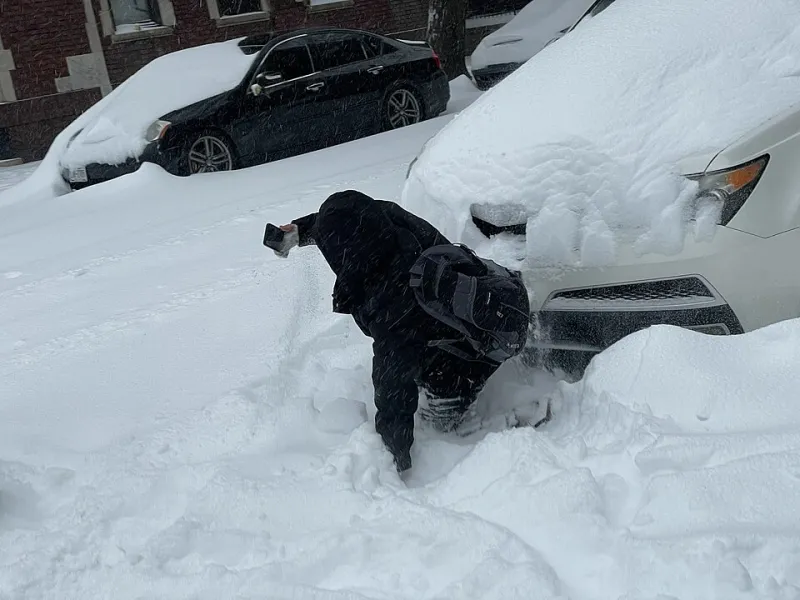
Photo: Wil540 art, CC BY 4.0, via Wikimedia Commons
Scroll long enough on a heavy news day and you will meet a video that is extremely sure of itself. A wall of brown water. A hillside on fire. A roof peeling off a barn in slow motion. The caption says today. The comments say prayers. And somewhere behind your eyes a small, tired voice asks the only question that matters: was this actually filmed this week?
In 2026, that question is harder to answer than it used to be. Phone cameras are better, compression is smarter, and video generators have gotten good enough that a clip can look real at thumbnail size and fall apart only if you stop and stare. The good news is you do not need a forensic lab or a fact-checking side hustle. You need about thirty seconds and a short list of things to look at, in order.
Start with the sky, not the caption
Weather is the cheapest timestamp on earth. If a clip claims to show a hurricane landfall today, pull up the current radar for that coastline. If it claims a blizzard in the Midwest, check whether the region is actually cold right now. Storms, smoke plumes, and snowpack do not care about your feed's urgency. A palm tree bending in a windstorm is a nice shot; a palm tree bending in a windstorm while the local forecast reads seventy-eight and calm is a tell.
Season is the same trick at a slower speed. Leaf color, what people are wearing, whether the trees are bare — these are stubborn details. So is the light. A clip filmed at 4 p.m. in January does not look like a clip filmed at 4 p.m. in July, no matter what the caption insists.
Hunt for the things that never change
Recycled footage has a habit of giving itself away through permanence. Street signs, storefront names, a water tower, a specific bridge railing, the shape of a courthouse lawn. If the video names a place, look for one fixed landmark and compare it to a current photo. Chains rebrand. Buildings get torn down. A gas station logo from a defunct brand is basically a birth certificate.
License plates are another quiet giveaway. So are the makes and models in a parking lot, the style of a police cruiser, and whether anyone in frame is holding a phone that came out before or after the event supposedly happened.
Check the uploader, not just the upload
A brand-new account with a username like a random string of digits and a bio full of emojis is not automatically lying — but it is not automatically anything. Tap the profile. How old is it? What did it post before this? Does the person seem to live where the video supposedly happened, or did they appear three days ago with a sudden interest in a town they have never mentioned?
Then do the boring thing: look for the same clip posted earlier. Search a phrase from the caption. Sort by date rather than relevance. Recycled video almost always has an ancestor, and the ancestor usually has a date attached.
Run the frame backwards
Screenshot one clear frame and run it through a reverse image search. This is the single highest-yield move in the whole routine, because it catches the laziest form of recycled footage: the clip that has been circulating for years under a rotating cast of locations. A fire in California becomes a fire in Greece becomes a fire in your cousin's group chat.
Reverse search also surfaces the original context, which is often mundane. Half the time the scary video turns out to be real footage of a real event that simply happened in 2021, in a different state, and nobody bothered to mention it.
Listen for the seams
AI-generated video in 2026 is impressive in a thumbnail and shaky under scrutiny. Watch hands. Watch teeth. Watch the way fabric moves and the way a crowd's faces resolve when the camera pans. Listen for audio that does not quite match the room — a roar of wind with no corresponding movement in the trees, or voices that sound clean and close while the person is fifty yards away.
Also watch the edges of the frame. Generated clips tend to get nervous near the borders, where background objects blur, duplicate, or quietly change shape between cuts.
Ask who benefits from 'today'
This is the least technical check and the most useful. A clip labeled as happening right now gets engagement. A clip labeled as happening in 2019 gets a shrug. That gap is the entire business model behind a lot of recycled footage, and it is why the timestamp is so often the vaguest part of the post.
None of this means you should distrust everything. It means the default should be a short pause rather than a fast share. The clip will still be there in two minutes. The friend you were about to correct will still be your friend in two hours. And if it turns out the video was from today after all, you have lost nothing but a little scrolling time.
The habit that actually sticks
The people who rarely get burned by bad video are not doing more work than you. They are doing the same few checks, every time, until it becomes reflex — sky, season, sign, uploader, reverse search, seams. It takes less time than reading the comments, and it beats being the person who forwarded last summer's flood as this morning's news.
Breaking stories reward speed. Being right rewards patience. You can usually have both, as long as you are willing to spend thirty seconds before you tap share.