When the Sky Turns Green and Your Phone Stays Silent
Picture a county that runs 1,100 square miles end to end. A tornado-warned storm tracks across it on a Wednesday afternoon. The siren in town goes off — but town is twelve miles away and the wind is blowing the wrong direction. The cell tower covers most of the highway corridor, except for a dead pocket along the creek bottom where a few hundred people happen to live. The local TV station cut in, but the storm knocked the satellite feed loose eight minutes ago. And the wireless alert that should have fired on every phone in the polygon? It did fire. It just landed on a phone sitting face-down in a kitchen where the owner had Do Not Disturb on and had never once looked at the settings menu.
This is not a horror story. It's just a normal afternoon in the American warning system — a patchwork of towers, sirens, broadcasts, apps, and social posts that nobody designed as a single product, and that no single agency actually operates.
The system is a stack, not a switch
Most people assume there's one big red button. There is a chain instead. The National Weather Service or a local emergency management agency drafts the message. It enters FEMA's alert pipeline. Cell carriers push it to towers inside a defined polygon. Sirens — if your town still maintains them, and plenty have quietly let theirs lapse — are triggered separately, often by a different office. TV and radio stations get the same warning through a third pipe. Then, unavoidably, a screenshot of the alert ends up on social media, which is how a lot of people find out first.
Each link in that chain has its own failure mode. Each also has its own success mode, which is why the gaps don't show up until a real event tests them.
Who the alerts tend to miss
The 2026 picture, drawn from emergency management planning documents and after-action reports from the past several severe weather seasons, points to a handful of consistent soft spots:
- Rural areas with thin coverage. Wireless alerts need a tower. Ranches and mountain hollows that rely on a single carrier, or on a booster, can drop out entirely.
- Older and cheaper phones. Some budget handsets and older devices handle the emergency alert channel poorly, or ship with it disabled by the carrier.
- People who have turned it off. Opt-out settings, Do Not Disturb, and silent-mode habits are the single largest self-inflicted gap in the system.
- Non-English speakers. Multilingual templates have expanded, but coverage is uneven county to county, and machine-translated warnings have landed badly before.
- Low-income households. No landline, no car, no weather radio, sometimes no reliable power to charge the phone — the same households most likely to be in a structurally vulnerable building.
- People who work nights. An alert that arrives at 3 a.m. is genuinely useful. An alert people have muted because they get four a week is not.
What's being tested right now
The good news is that 2026 has been an unusually busy year for fixing this stuff. State emergency management agencies are running more frequent, more localized test cycles rather than the old once-a-year, statewide blast that everyone ignores. Several jurisdictions are experimenting with narrower alert polygons so a warning hits a single valley instead of an entire county. Others are pushing multilingual message templates in Spanish, Vietnamese, and Somali through the same pipeline. Siren modernization money has finally started flowing to towns that hadn't replaced a rotor since the 1990s.
The harder problem is trust. Alerts compete with a phone that already buzzes forty times a day, and a warning that gets ignored is functionally the same as one that never sent.
Five minutes of settings that matter more than you think
Do these once. Then forget about them, which is the whole point.
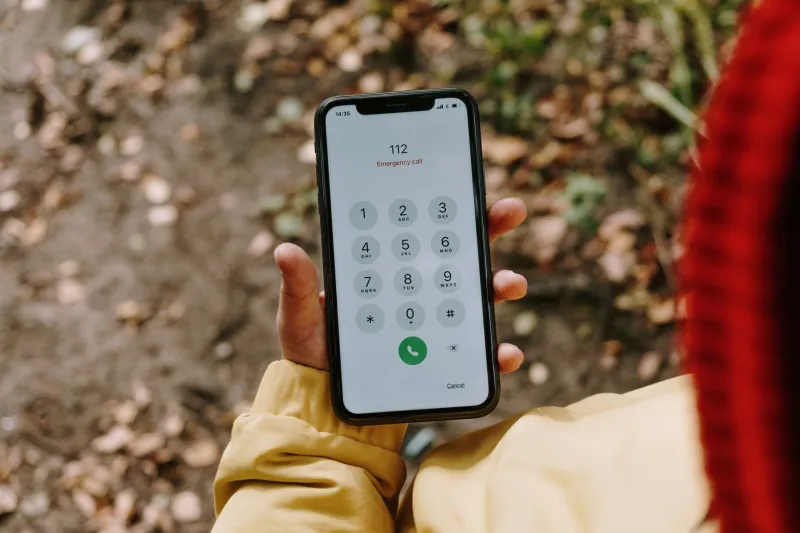
- Find the government alerts menu. On iPhone it's under Notifications, near the bottom. On Android it's usually under Safety & emergency. Confirm that emergency alerts and, critically, public safety alerts are on. Many people have the loudest channel disabled and don't know it.
- Check that your phone can actually hear a tower. If you drop to no service at home, you have no wireless alert coverage at home. A $25 NOAA weather radio solves a problem your phone can't.
- Set up a second path. Enable a trusted local station's app, or a county alert signup. Two channels is the minimum for anything life-safety.
- Tell one person who needs to hear it. The relative who keeps the phone on silent, the neighbor without a car. Word of mouth still moves faster than infrastructure in a lot of places.
Where local news still earns its keep
The tornado that hits at 4:47 p.m. is not a national story. It's a story for nine counties, and the people who cover it are the ones who know which road floods first and which siren has been broken since spring. Whatever else changes about how Americans get their news, that part hasn't.
Which is the real takeaway here. The alert is a tool, not a plan. The plan is knowing the people around you, having one backup, and checking the settings before the sky turns green.