The Chime Knows First: How News Alerts Train Your Body to React
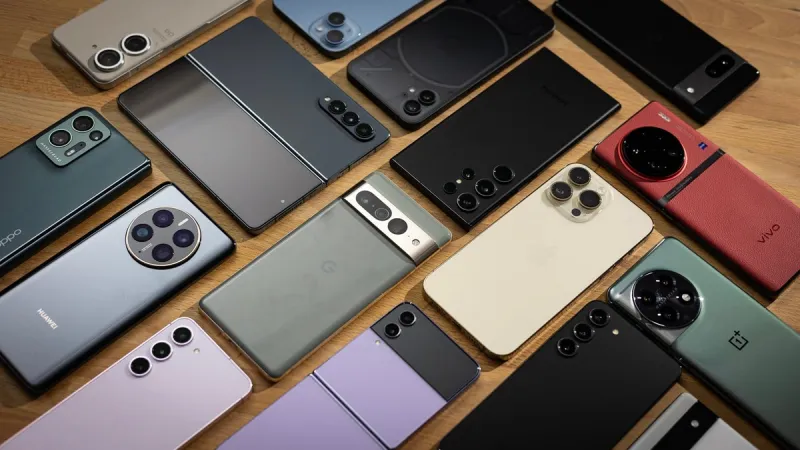
Photo: smartphone notification alert on kitchen counter with news app, shallow depth of field, via droidafrica.net
Your phone is face down on the kitchen counter. It buzzes once, a short three-note rise, and your hand is already moving. You have not read a word. You do not know if it is a school closure, a market drop, or a celebrity breakup. The sound told you something was happening, and your body answered before your brain caught up.
That is not an accident. It is design.
A Reflex, Not a Decision
News organizations have spent decades building audio identities. The CNN breaking-news sting. The BBC pips. The iPhone tri-tone. The low brass swell under a network's morning show. These are not decoration. They are conditioning.
Audio can grab attention faster than text because sound is processed on a fast track. A sudden rise in pitch or a sharp attack signals urgency. Once that sound is paired with news, it becomes a cue. After enough repetitions, the cue alone produces the response: the reach, the unlock, the quickening pulse.
The Anatomy of a News Sound
Most alert sounds share a few traits. They have a short attack, a clear rise or fall, and a clean ending that leaves space for whatever comes next. They are built to cut through traffic, conversation, and the background hum of a house.
The iPhone tri-tone works because it is short, distinct, and just musical enough to stick without becoming a song. The CNN chime works because it is brief and authoritative, a tiny fanfare that says 'pay attention' without saying 'panic.' Sonic branding agencies talk about audio logos the way designers talk about fonts. The goal is recognition in under a second.
Why Some Alerts Make Your Stomach Drop
Not all news sounds are neutral. A specific tone can become associated with bad weather, a missing child, or a market crash. After enough exposure, the sound itself becomes the stressor. People describe a physical jolt, a tight chest, a quick check of the family group chat.
That is classic conditioning, and it is not always a bad thing. A tornado siren should make you move. The problem is when every alert borrows the same urgency, and the nervous system cannot tell a breaking story from a breaking emergency.
The Quiet Arms Race
In 2026, alerts are more personalized. Smart speakers announce headlines. Watches tap your wrist. Headphones deliver spatial audio that sounds like a voice just behind your left ear. The sound may come from your ceiling, your pocket, or your wrist, but the effect is the same: the boundary between checking the news and being told keeps thinning.
Newsrooms are also experimenting with AI-generated audio briefings and voice clones of familiar anchors. That can feel intimate, even comforting. It can also make a synthesized voice sound like someone you trust, which is a new kind of power for a medium built on familiarity.
What Always-On Listening Does to a Public
There is a cost to a public that is always listening. Attention is finite. If every chime is a small emergency, the nervous system starts to treat the whole day as one long alert. People learn to mute, swipe, or tune out, which means the most important sound and the least important sound start to look the same.
That is the paradox of sonic branding. The better the sound works, the more often it is used, and the faster it wears out. A chime that once meant 'this matters' becomes background noise.
The Mute Button Is a Statement
The mute button is not antisocial. It is a way of choosing when to be reachable. The next time your phone buzzes and your body reacts before your brain, notice it. The sound was built to do that.
The question is whether you still want to hand over the first second.