No Newsroom, No Problem: The Podcasters Who Get There First
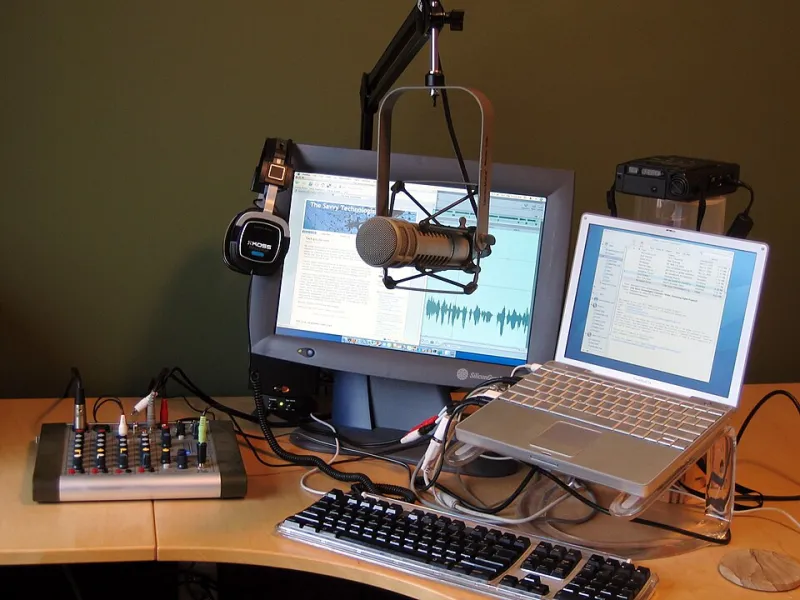
Photo: Tim Wilson from Blaine, MN, USA, CC BY 2.0, via Wikimedia Commons
The commute is where a lot of America now finds out what happened. Not at a desk, not on a couch, not in front of a chyron — in a car, at 7:12 in the morning, listening to two people in a spare bedroom talk over each other about a story that broke at 5:40.
That is the shift worth paying attention to in 2026. Independent podcast hosts, many of them with no newsroom, no desk, and no legal department, are increasingly the first place people encounter a major story. They are not waiting for a rundown. They are not saving it for the top of the hour. They are hitting record, calling a friend who lives two towns over, and publishing in the time it takes a cable booker to find a satellite truck.
Speed is the whole business model
A traditional broadcast operation has a chain of custody. A producer confirms, an editor tightens, a standards desk asks an uncomfortable question, and then it airs. That chain is slow and it is also the reason the thing you watch is usually, mostly right.
A podcast has a microphone and a hunch. That is not a knock. When a storm is moving and people need to know which roads are closed, the hunch often wins. Hosts who live in the affected area can describe the wind outside their own window. They can read a text from a listener who is stuck on the highway. They can say the thing a network anchor cannot say, which is: I do not know yet, and here is what I am hearing.
That transparency is genuinely valuable. So is the tone. Cable news performs urgency. A good podcast sounds like a person who is also a little freaked out.
What audiences actually gain
Three things, mostly.
Context that arrives on time. A host with forty minutes can explain why a school board vote matters instead of reading a headline over b-roll. They can bring in the one guest who actually lives there. They can follow a thread across three episodes instead of dropping it when the ratings dip.
A relationship. Listeners describe the same feeling — that the host is a person they know, not a brand they consume. That parasocial warmth is real, and it is doing a lot of work when a story is frightening.
Permission to be confused. The best of these shows model uncertainty out loud. Here is what I have, here is what I do not have, here is what I am trying to find out. That is closer to how information actually works than a confident voice reading a script.
What audiences lose
Here is the part that does not get a highlight reel.
Corrections. A newsroom has a process for being wrong, and it is ugly and slow and it exists. A podcast has a pinned comment and a maybe-next-episode. When a host gets a name wrong or repeats a rumor they half-remember, the correction often never reaches the people who heard the original. The episode keeps living in the feed, unchanged, doing its quiet damage.
Editing, in the structural sense. Not audio editing — the other kind. The person who says, hey, we cannot say that yet. When the host, the producer, and the fact-checker are all the same person on a Tuesday night, some of those checks simply do not happen.
And a business incentive that rewards the loudest take. Aggregation is cheap. Reaction is cheaper. A show that spends twenty minutes being furious about a story will outperform the one that spends twenty minutes explaining it, every single time, and everyone in the industry knows it.
The correction problem is the real one
Ask anyone who studies misinformation where the trouble starts, and they will usually point at the same place: the first version. The original post, the original episode, the original clip. Corrections travel at a fraction of the speed of the mistake, and podcast corrections travel slower than most, because there is no chyron to update and no front page to change.
Some hosts have started building their own fixes. A corrections segment at the top of the next episode. A living document linked in the show notes. A rule that anything involving a named private individual waits until a second source confirms it. It is not a standards desk, but it is not nothing, and it is more than a lot of legacy outlets manage on a slow news day.
What the desk could steal
The interesting thing about this moment is that it is not actually a competition. The best podcast hosts are doing something newsrooms used to do well and mostly stopped: talking to people like they are adults who can handle a sentence that begins with we do not know.
And the best newsrooms already have the thing podcasts struggle to build — an institutional memory, a correction process, and a phone full of people who will tell them when they are wrong.
The future probably looks less like one format replacing the other and more like a hybrid: the speed and voice of the independent host, paired with the checks that keep the whole thing from quietly going sideways. Until then, the voice in your earbuds will keep getting there first, and it will keep being mostly right, and occasionally very wrong, and you will have to decide for yourself which is which.
Which, honestly, is the whole job now.