Your Cart Is Full Because a Countdown Timer Told You to Panic

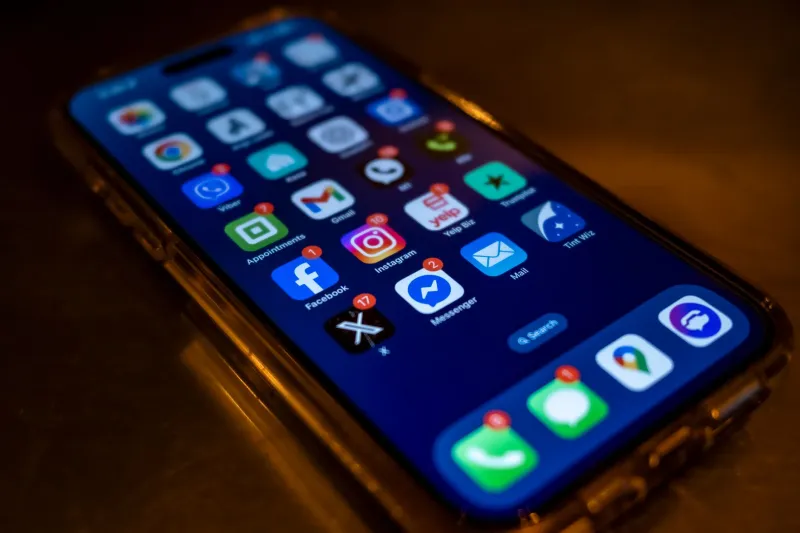
Somewhere on your lock screen, sandwiched between a weather update and a group chat, there is a notification that says BREAKING in all caps. It is about a blender.
By the time you read this, the 2026 holiday shopping season will be in full sprint, and the alert economy has never been louder. Retailers, deal blogs, affiliate accounts, and a small army of automated price-tracking bots have all figured out the same thing at the same time: if you package a discount the way a newsroom packages an emergency, people click. And clicking is most of the job.
The vocabulary got borrowed
Scroll through your notifications from the last week of November and count how many use the word breaking, just in, urgent, or last chance. Then count how many actually describe something that changed in the last hour.
The borrowing is deliberate. News alerts work because they answer a question you didn't know you had — did something happen, and does it affect me? Retail alerts borrow that structure and swap the payload. Instead of storm warning, it's doorbuster. Instead of developing story, it's price drop. The format is identical. The stakes are a mattress.
The manufactured scarcity playbook
Look closely at a typical Black Friday push in 2026 and you'll usually find three ingredients stacked on top of each other.
The countdown. A timer that expires at midnight, or in four hours, or whenever you close the tab. Many reset. Some are tied to a promo window that quietly rolls forward every day. Watch one for a week and see if it means anything.
The invented crowd. Twelve people are looking at this right now. Only 3 left! Sometimes true. Frequently a function of how the site groups inventory, and just as frequently refreshed from a cache.
The fake floor. Lowest price ever is a claim with a specific, checkable meaning, and the checkable version often disagrees. Price history tools exist for exactly this reason.
Retailers will tell you these are standard promotional tools and always have been. That's fair, as far as it goes. What's different in 2026 is the volume and the delivery mechanism — the same lock screen real estate used for amber alerts, now carrying a percentage off a smart speaker.
Why your phone buzzes at 6:02 a.m.
The push notification is the whole game now. Email has been dying for a decade, and social feeds are pay-to-play. But a push notification is free, it's personal, and it lands in a spot people actually look at before they've had coffee and recovered their judgment.
Deal sites and affiliate accounts have gotten very good at timing. That 6 a.m. buzz is not random — early-morning windows catch people in bed with a phone and no immediate consequence for a purchase. The evening buzz hits during the couch-scroll slump. Neither is an accident.
There's also an honest version of this. A price tracker that only pings when an item you flagged actually drops below your target is genuinely useful, and some are. The difference between that and a firehose of BREAKING notifications is about three settings and a lot of restraint.
The quick test before you tap Buy
- Check the price history. If a tool shows the same price held for six weeks, the sale is theater.
- Ignore the timer. Check the calendar. If the deal is still live tomorrow, it was never a deadline. It was a mood.
- Search the model number, not the product name. Retailers use near-identical SKUs with different specs for exactly this reason.
- Ask what the price was last month, not what the crossed-out number says. The crossed-out number is a design element.
- Turn off push for every store app except the one or two you actually care about. This is the single highest-leverage five minutes of the season.
- Set a budget before the alert hits, not after. Nobody makes a good decision eleven seconds after a phone buzzes.
The part that's not the retailer's fault
Some of the urgency is real. Inventory genuinely is limited on hot items. Shipping deadlines genuinely do exist in mid-December, and a late order genuinely does arrive after the holiday. The problem isn't urgency — it's urgency applied to everything, uniformly, until the word stops meaning anything. The same erosion is happening to news alerts, by the way, and for the same reason.
So what do you actually do
Buy the thing you were already going to buy. Check it against a price history. Use the timer as a signal that someone wants your money, not as a signal that time is running out.
And when your phone lights up on a Tuesday morning with the words BREAKING DEAL, remember the blender. It'll still be there at noon.