When the Paper Dies, the Trouble Starts: Life Inside an American News Desert
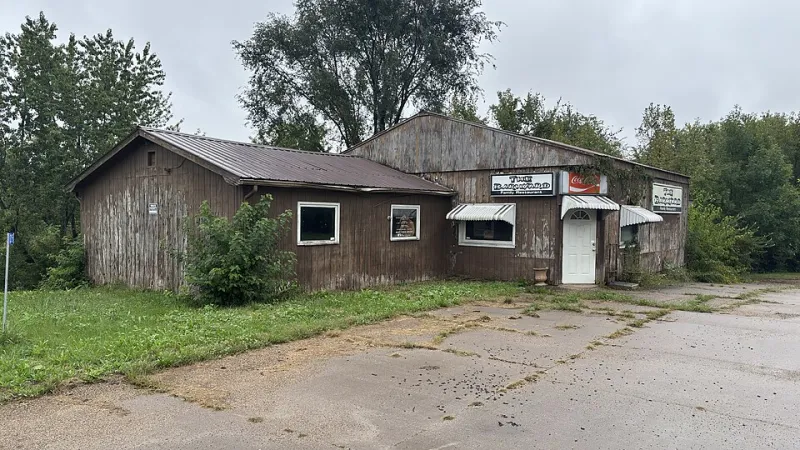
Photo: Toad40, CC BY-SA 4.0, via Wikimedia Commons
For 112 years, the Lamar County Ledger covered everything from high school football championships to the county commission's budget fights. Then in 2019, the presses stopped. The building on Main Street sat empty for two years before a insurance agency moved in. Today, if you want to know what your county commissioners voted on last Tuesday, you can drive to the courthouse and ask — or you can wait and hope somebody tells you.
Lamar County isn't unique. It's part of a quiet nationwide collapse that researchers have been tracking for years, and the consequences are a lot bigger than losing the box scores.
The Math of a Vanishing Industry
Since 2005, the United States has lost roughly a third of its newspapers, according to researchers at Northwestern's Medill School. More than 200 counties have no local news outlet at all, and thousands more are down to a single survivor — often a skeleton crew producing a couple of stories a week.
The economics are brutal and not particularly mysterious. Print advertising, which once funded newsrooms the way ticket sales fund stadiums, migrated to Google and Facebook. Classifieds — the quiet cash cow of every small paper — evaporated entirely. What's left is a product that costs real money to produce but competes with free.
What Gets Lost When Nobody's Watching
Here's the part that should worry everyone, regardless of politics: when local news disappears, the people who study it can measure the damage.
Research has consistently found that towns without a newspaper see lower voter turnout, fewer candidates running for local office, and higher borrowing costs for municipal bonds — because without coverage, lenders have no easy way to gauge how a city is actually being run. One widely cited study found that after a paper closes, municipal borrowing costs tick up, costing taxpayers real money.
And then there's the corruption question. A 2019 study out of the University of Illinois at Chicago and Notre Dame found that when newspapers shut down, fewer candidates file for local office and uncontested races multiply. Nobody's running because nobody's watching.
The Courthouse Beat Nobody Covers
Talk to anyone who spent decades in community journalism and they'll tell you the same thing: the most important stories were rarely the front-page ones. They were the rezoning votes buried in a consent agenda. The water contract renewed without competitive bidding. The sheriff's budget line item nobody asked about.
That kind of accountability doesn't require heroics. It requires a person in a folding chair at 9 a.m. on a Tuesday, taking notes while everyone else in the room hopes they're somewhere else.
Some places are trying to fill the gap. Nonprofit newsrooms like Report for America have placed young journalists in underserved communities. A handful of digital startups are experimenting with subscription models that work in mid-size markets. But the math remains grim: philanthropy and startups combined aren't replacing anywhere near the number of journalists who've left the field.
The Trust Problem Cuts Both Ways
Here's the irony at the heart of the news desert crisis. National media trust ratings are at historic lows — but local newspapers have historically polled far better than national outlets. People may distrust "the media" in the abstract while still trusting the reporter who covered their kid's graduation and the county fair.
When that local outlet dies, residents don't simply go without news. They fill the vacuum — often with national cable coverage, partisan Facebook groups, and Nextdoor threads. The local perspective, the one that knows which roads flood and which families have run the hardware store for three generations, simply vanishes from the conversation.
Can Anything Bring It Back?
A few states are experimenting. New York and Illinois have considered tax credits for local journalism. Some communities have launched cooperative ownership models, where residents literally buy shares in their hometown paper. Others are betting on newsletters — a single dedicated person emailing out what the county commission did this week.
None of it is a silver bullet. But the alternative is a country where thousands of small decisions get made in near-total darkness, where the only people who know what happened at Tuesday's meeting are the people who were in the room.
Democracy doesn't need every story covered. It needs someone in that folding chair. The question every news desert town is now asking is a simple one: who's going to do it?