The Local Reporter Who Had It First: How Small Newsrooms Keep Scooping the Big Guys
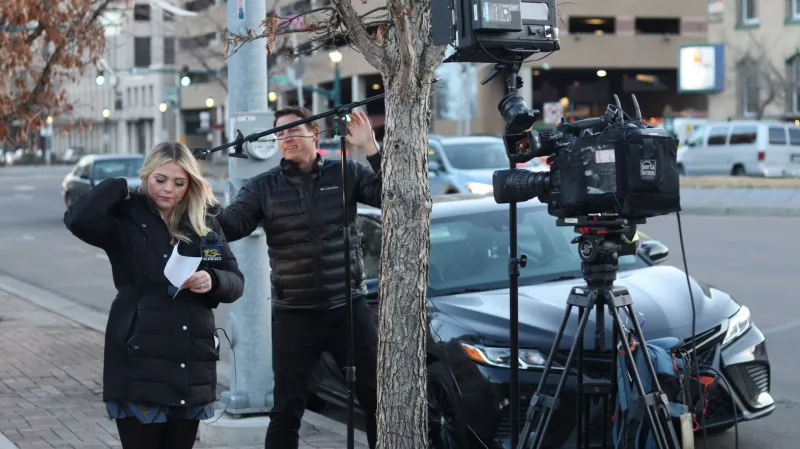
Imagine spending months cultivating sources, filing public records requests, and driving two hours to interview someone in a rural county courthouse — only to watch a national outlet publish a version of your story three days later and watch it go viral with zero acknowledgment of your work. For a growing number of local journalists across the United States, that's not a hypothetical. It's Tuesday.
The visibility gap between local and national news is one of the most underappreciated structural problems in American media. And it has real consequences — not just for the reporters who get overlooked, but for how the public understands where information actually comes from.
Ground Level Is Where the News Lives
Here's a fundamental truth about how major stories develop: they almost always start local. A water contamination crisis doesn't begin at a Senate hearing — it begins when a reporter at a small-town paper notices something weird in a municipal report. A police misconduct story doesn't start with a national investigation — it starts when a local beat reporter builds enough trust with a community source to hear what's actually happening on the ground.
The reporters closest to the story are, almost by definition, the ones who find it first. They know the local officials, they recognize the document irregularities, they hear the rumors before those rumors have any reason to reach a national desk. Geographic proximity is a genuine journalistic advantage, and local reporters have it in abundance.
What they don't have is reach. And in a media environment where reach determines credibility, that's a serious problem.
How the Credit Gets Reassigned
The mechanics of how national outlets absorb local scoops vary, but the pattern is consistent enough to have a name in journalism circles: parachute crediting, or more bluntly, not crediting at all.
Here's how it typically works. A regional outlet — say, a Midwestern TV station or a state-level news nonprofit — breaks a genuinely significant story. It gets modest traction locally, maybe some regional social media pickup. Then a national reporter spots it, makes a few additional calls, and files their own version. That version, backed by the brand recognition of a major outlet, gets the clicks, the cable hits, and the awards consideration. The original story is lucky if it gets a parenthetical mention.
Sometimes it's more benign than it sounds. National reporters often don't know they're following a trail someone else blazed — they find a tip online, chase it independently, and genuinely believe they're developing an original story. But the effect on the local outlet is the same either way: someone else gets the glory.
The Audience Credibility Problem
There's a deeper issue embedded in this dynamic, and it goes beyond professional fairness. When national outlets consistently appear to break the stories that local outlets actually broke first, it shapes how audiences assess credibility. If you only ever hear about a story after the New York Times or NPR covers it, you're going to associate those brands with breaking important news — even if the actual information originated elsewhere.
This perception gap has a compounding effect. Outlets perceived as more credible attract more readers, which generates more revenue, which allows them to hire more reporters, which makes them more likely to be perceived as credible. Local outlets, meanwhile, operate on tighter margins and shrinking staffs, making it harder to pursue the kinds of investigations that generate big scoops in the first place.
It's a cycle, and it's not a particularly fair one.
The Outlets Fighting Back
Some regional newsrooms are pushing back, and not just through frustration. A growing number of local and state-level outlets — many of them nonprofit news organizations that have emerged over the past decade — are building digital audiences that rival their legacy counterparts in specific geographic areas.
Outlets like The Texas Tribune, CalMatters, Mississippi Today, and dozens of others in the Report for America network have built reputations for original accountability journalism that national outlets now routinely follow. They've also gotten savvier about claiming credit — publishing original stories with clear timestamps, building social media audiences before national pickup, and explicitly calling out when their work isn't attributed.
The rise of local journalism newsletters and independent reporters on platforms like Substack has also changed the dynamics somewhat. When a reporter has a direct relationship with their audience, they can say plainly: "I reported this first, here's the date, here's the link." That kind of direct communication bypasses the traditional credibility hierarchy in ways that weren't possible even five years ago.
Speed Versus Reach: The Uncomfortable Trade-Off
There's a genuine tension at the heart of this issue. Speed and reach don't always go together, and in journalism, reach is what moves the needle on actual outcomes. A local outlet might break a story about environmental violations affecting a small community, but if the story doesn't reach the state legislature or a federal agency, nothing changes. Sometimes it genuinely takes a national outlet's amplification to turn a local scoop into a national reckoning.
That doesn't make the credit gap acceptable, but it does complicate the moral calculus. The best version of this system would involve national outlets explicitly elevating the original local reporting rather than simply absorbing it — treating regional journalists as partners rather than research assistants.
A few national outlets are experimenting with exactly this model, featuring local journalists as contributors or co-bylines when following up on their work. It's not widespread, but it's a start.
The reporter who had it first deserves to be known as the reporter who had it first. That's not just a professional courtesy — it's how audiences learn to trust the people closest to the stories that matter most.