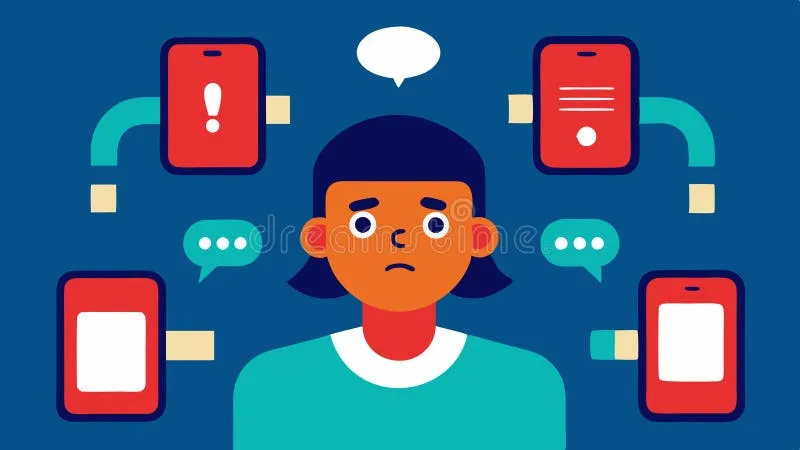
Can't Stop Refreshing: What Constant News Checking Is Actually Doing to Your Brain

Ask yourself honestly: how many times have you checked the news today? Not a rough estimate — actually think about it. The morning scroll before you got out of bed. The check during your commute. The quick peek between meetings. The refresh during lunch. The late-night spiral that kept you up way past when you meant to sleep.
For a growing number of Americans, compulsive news checking isn't an occasional habit. It's a near-constant background process running alongside everything else in their lives. And according to researchers who study attention, stress, and behavioral psychology, it's doing measurable damage.
Six Minutes. That's the Average.
A 2023 behavioral study found that during high-profile news events — elections, major disasters, political crises — many Americans check news sources or social media feeds every six minutes or fewer. Not every hour. Every six minutes.
That number probably doesn't shock you if you've lived through a major news cycle recently. What might surprise you is what's driving it. Most people assume they're checking because they want information. But psychologists who study this behavior say the information itself is almost secondary. What people are actually chasing is resolution — a sense that the story has ended, the uncertainty has cleared, and they can finally exhale.
The problem is that breaking news almost never provides that. It provides updates. Partial information. New developments that raise new questions. Which means the resolution never comes, and the checking never stops.
Your Brain on Breaking News
Here's the neuroscience piece, and it's genuinely fascinating even if the implications are grim.
Your brain's dopamine system — the same system involved in gambling, social media likes, and slot machine pulls — responds powerfully to variable rewards. Not guaranteed rewards. Variable ones. The uncertainty of "maybe this refresh will have something new" is neurologically similar to pulling a slot machine lever. Sometimes you get something. Sometimes you don't. That unpredictability is actually what makes the behavior so hard to stop.
During breaking news events, this system goes into overdrive. There's genuine new information arriving at irregular intervals, which means the variable reward schedule is actually real, not simulated. Your brain is getting intermittent hits of genuine novelty, and it wants more.
Layered on top of that is the stress response. Threatening or uncertain news activates the amygdala — your brain's alarm system. Once activated, the amygdala pushes you to seek more information as a survival mechanism. Knowing more about a threat, evolutionarily speaking, helps you respond to it. Your brain doesn't distinguish between a predator in the grass and a geopolitical crisis on the other side of the world. Both trigger the same "gather more information" impulse.
The result: you're anxious, so you check the news. The news makes you more anxious. So you check again.
The People Living This
Marcus, a 34-year-old teacher in Ohio, described his news habits during a major political event last year as "basically losing a week of my life." He estimates he was checking his phone every few minutes during waking hours, sleeping poorly, and finding it impossible to be present in conversations that weren't about the news.
"I kept telling myself I just needed to know what was happening," he said. "But even when I found out, I immediately needed to know the next thing. There was no point where I felt like I had enough."
This pattern — the goalpost that keeps moving — is something therapists who specialize in anxiety and media consumption recognize immediately. The technical term some researchers use is "news addiction," though it's not yet a formally classified disorder. What is clear is that the behavioral loop mirrors other compulsive patterns in clinically meaningful ways.
What It's Costing You Beyond Anxiety
The psychological toll goes beyond stress. Chronic news checking fragments attention in ways that linger long after you've put the phone down. Researchers studying media multitasking have found that people who frequently switch between information sources show reduced ability to filter irrelevant information and score lower on tests of working memory — even when they're not actively consuming media.
In plain English: the constant checking habit may be making it harder to focus on anything else, even when you're trying to.
Sleep is another casualty. News — especially threatening or emotionally charged news — consumed close to bedtime elevates cortisol levels and interferes with the wind-down process your brain needs to transition into quality sleep. The late-night news spiral isn't just a time-waster. It's actively degrading your rest.
Breaking the Cycle Without Going Dark
Here's the part that actually matters: you don't have to go full news detox to get relief. Experts who study this stuff consistently say that complete unplugging is both unrealistic for most people and unnecessary. What works is structure.
Scheduled check-ins — say, morning, midday, and evening — give your brain the information it's craving while breaking the compulsive every-few-minutes loop. Turning off push notifications from news apps removes the external triggers that pull you back in before you've decided to check. Choosing one or two trusted sources rather than scanning every platform reduces the variable reward dynamic.
Therapists also recommend what some call a "news diet" — being intentional about what you consume and when, the same way you might be intentional about food. Not restriction for its own sake, but awareness that what you take in affects how you feel.
The news isn't going anywhere. The next breaking story will surface whether you refresh in six minutes or six hours. And the version you get at six hours will almost certainly be more accurate, more complete, and — if you can stand the wait — considerably less damaging to your nervous system.