Your Brain Is Begging for the Latest Update — Here's Why Waiting Is Harder Than Ever
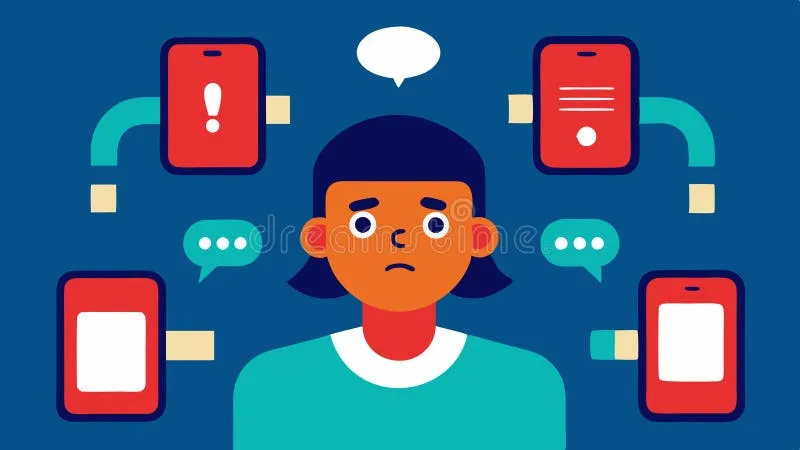
Photo: person looking stressed at smartphone news notifications, via thumbs.dreamstime.com
Let's be honest. You've probably already checked your phone twice since you started reading this. Maybe three times. There's a push notification sitting at the top of your screen right now — something about a vote, a verdict, a celebrity, a storm — and it's pulling at you like a magnet. That feeling? Completely normal. Also kind of a problem.
The so-called "24-hour rule" — the idea that you should wait a full day before accepting breaking news as fact — has been floating around media literacy circles for years. In theory, it makes total sense. Stories change. Details get corrected. Context shows up late. Waiting means you get the real version instead of the panicked first draft. But in 2024, with notifications firing every few minutes and social feeds designed to keep you hooked, asking someone to sit on a breaking story for 24 hours feels a little like asking them to hold their breath underwater.
So we went looking for answers. We talked to real people attempting the challenge, dug into the neuroscience behind why this is so hard, and asked the experts whether the 24-hour rule is a golden standard or just a nice idea that doesn't survive contact with reality.
The Dopamine Loop Nobody Asked For
Dr. Priya Mehta, a behavioral psychologist based in Chicago, puts it plainly: "Every time you refresh and see something new, your brain releases a small amount of dopamine. It's the same reward system that drives gambling. The unpredictability is actually the point — you don't know what you'll find, and that uncertainty keeps you coming back."
This isn't a flaw in your character. It's a feature of how your brain was built, and modern news platforms know exactly how to exploit it. Autoplay videos. Infinite scroll. Red notification badges. These aren't accidents — they're carefully engineered to keep your attention glued to the screen. The news industry and the attention economy have essentially merged, and your nervous system is caught in the middle.
Jamie Torres, a 34-year-old teacher from Phoenix, tried the 24-hour rule for two weeks last spring. "The first three days were genuinely rough," she said. "I'd see something trending on Twitter — sorry, X — and I'd physically feel anxious not knowing what it was. Like I was missing something important."
She wasn't alone in that feeling. That anxiety has a name: FOMO, or fear of missing out. And when it comes to news, FOMO hits differently than it does with a party you weren't invited to. News feels important. It feels like civic duty. Checking in feels responsible. Logging off feels irresponsible.
Is FOMO Actually Justified?
Here's the uncomfortable truth: most of the time, it isn't.
Research from the Reuters Institute found that the majority of breaking news stories that trend heavily in the first few hours either get significantly updated, partially corrected, or fade into irrelevance within 24 to 48 hours. The version of a story that exists at 9 a.m. is frequently a very different animal than the version at 9 p.m. Names get wrong. Casualty counts shift. Motives get misattributed. The "suspect" turns out not to be.
Daniel Okafor, a digital wellness coach in Atlanta who works with clients on what he calls "news hygiene," has seen the pattern repeat itself constantly. "People feel like they need to know right now. But what they're usually getting right now is incomplete, sometimes inaccurate, and almost always more alarming than the full story turns out to be. The anxiety they feel from consuming that early coverage is real — but it's often based on information that won't hold up."
That's a significant cost. And it's one most of us pay without even realizing it.
What Happens When You Actually Try to Wait
Jamie Torres made it through her two-week experiment. By the end, something had shifted. "I started noticing how many stories I had panicked about just... resolved themselves or turned out to be way less dramatic than the initial reports," she said. "I felt less stressed overall, and when I did read the news, it actually felt more useful."
But she also acknowledged the experiment had limits. "There were moments where something was happening in real time — weather, a local emergency — and waiting didn't make sense. You need to know if a tornado is heading toward your neighborhood right now, not tomorrow morning."
That's the nuance the 24-hour rule often glosses over. Not all breaking news is equal. There's a meaningful difference between a developing political story that will have seventeen updates before dinner and an emergency alert that requires immediate action. The rule works best as a filter for the former, not a blanket policy for everything.
Realistic Strategies That Don't Require Going Off the Grid
So what actually works for people who want accuracy without completely unplugging? The experts we spoke with offered a few approaches that don't require you to become a digital hermit.
Set specific news windows. Instead of checking constantly, pick two or three times a day — say, morning coffee, lunch, and after dinner — to catch up. You'll still be informed. You'll just be less reactive.
Treat push notifications like junk mail. Turn off breaking news alerts from apps unless they're from sources you've specifically vetted. Most of what gets pushed to your phone in real time is designed to create urgency, not deliver clarity.
Ask yourself: does this require action right now? If the answer is no, it can wait. If a story doesn't change what you need to do today, there's no practical reason to consume it the second it publishes.
Follow the second-day story. Make a habit of looking for the follow-up piece rather than the initial report. That's usually where the real reporting lives — after the dust settles and journalists have had time to verify what actually happened.
Give yourself permission to not know yet. This one sounds simple, but Dr. Mehta says it's often the hardest shift. "There's a cultural pressure in the U.S. right now to always be informed, always be current. Giving yourself permission to say 'I'll find out later' feels almost countercultural. But it's one of the most effective things you can do for your mental health and your media literacy."
The Honest Answer
Can you actually wait 24 hours in 2024? Probably not always. And that's okay. The goal isn't perfection — it's awareness. Knowing why you feel compelled to refresh, recognizing that the first version of a story is rarely the best version, and building even a small buffer between breaking news and your reaction to it? That's already a significant upgrade from where most of us are right now.
Your feed will keep moving whether you're watching or not. The news will still be there in an hour. In most cases, it'll be better then, too.