The Moment That Rewired You: How One Breaking Story Changed the Way You Consume News Forever
Most people can't name the exact date they stopped trusting the weather forecast. But ask them when they stopped trusting breaking news, and a lot of them will give you a specific story. A specific anchor. A specific push notification that arrived at the worst possible moment and turned out to be only half right.
There's a term therapists have started using more frequently in recent years: media-induced threshold events. It's a clinical way of describing something most of us have felt in a gut, not-quite-nameable way — the moment one news story fundamentally broke how you process information. Not just what you believed, but how you believed anything at all.
The Before and After Nobody Talks About
Sarah, a 34-year-old teacher from Columbus, Ohio, remembers the exact moment. It was a mass shooting — one of many, she's quick to note, but this particular one had early reports that included details that turned out to be completely fabricated. A suspect who wasn't the suspect. A motive that was invented by social media speculation and then repeated by cable news as fact.
"I had already texted my mom," Sarah says. "I had already told my students' parents something that wasn't true. And I got that information from a network I'd trusted my whole life."
She didn't quit news entirely after that. But she stopped watching cable. She started waiting 24 hours before sharing anything. She describes it as a kind of low-grade grief — mourning a relationship with information that she can't get back.
That grief is more common than most media analysts want to admit.
Doomscrolling Isn't Random — It Has an Origin Story
Psychologists who study media behavior point out that doomscrolling — that compulsive, almost punishing habit of refreshing feeds during a crisis — often traces back to a specific triggering event. The brain, wired to resolve uncertainty, gets stuck in a loop when a story keeps changing. Each update promises resolution. Each update delivers more questions.
Dr. Joanna Mills, a cognitive behavioral therapist based in Chicago who works with clients experiencing news-related anxiety, describes it this way: "When information is unstable — when what you learned an hour ago is being contradicted now — your nervous system doesn't just update the file. It flags the whole folder as unsafe. That's when compulsive checking starts. You're not looking for news anymore. You're looking for solid ground."
For some people, that search for solid ground leads them deeper into the scroll. For others, it sends them in the opposite direction entirely.
The Quitters and the Obsessives
Media researchers at the Reuters Institute for the Study of Journalism have documented what they call "news avoidance" — a measurable, growing segment of the population that has deliberately reduced or eliminated their news consumption. In the US, the numbers have been climbing steadily. Their reasoning almost always includes a moment of disillusionment: a story they followed closely that turned out to be wrong, a correction that never got the same airtime as the original error, a narrative that shifted so many times it became meaningless.
Marcus, a 41-year-old from Atlanta who works in logistics, quit cable news after the early coverage of a high-profile criminal trial that he followed obsessively. "Every day it was a different story," he says. "I watched hours of coverage. By the time the verdict came, I realized I knew less than I did at the start. I knew what the analysts wanted me to think. That was it."
He now gets his news from a single daily newsletter and one podcast. He calls it "portion control."
On the other end of the spectrum are people like Diane, 29, from Seattle, who became a compulsive news consumer after a story that hit close to home. A wildfire that threatened her childhood town was covered in fragments — early reports wildly off on containment percentages, evacuation zones shifting by the hour. She couldn't stop checking because stopping felt dangerous.
"It rewired something," she says simply. "I can't read a headline now without immediately wondering what part of it is going to change."
What Newsrooms Are — and Aren't — Doing About It
Here's the uncomfortable part: most newsrooms are aware of this dynamic. They know that their coverage of breaking events shapes not just public opinion on those events but the public's broader relationship with media itself. And yet the structural incentives — the ad revenue tied to clicks, the social media algorithms that reward speed over accuracy, the competition to be first — haven't changed enough to reflect that awareness.
Some outlets have introduced slower, more deliberate breaking news protocols. A handful of major publications have hired "accuracy editors" whose sole job during a breaking news situation is to pump the brakes. But these are exceptions, not industry norms.
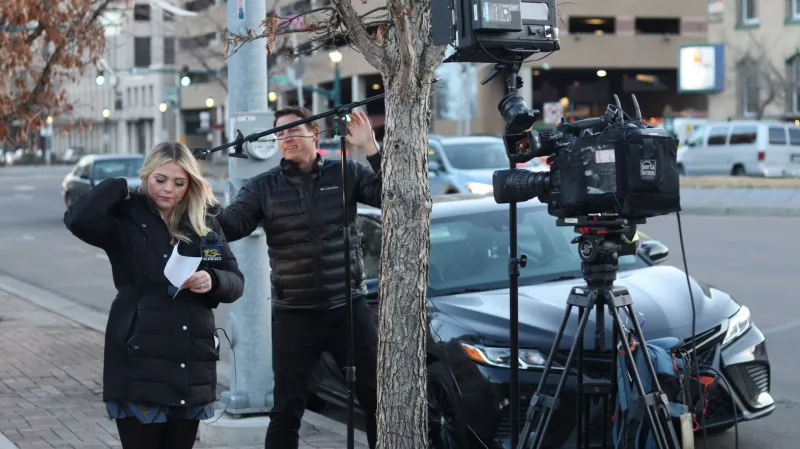
A veteran assignment editor at a regional TV station, speaking anonymously, put it plainly: "We talk about trust constantly in editorial meetings. And then the scanner goes off and all of that goes out the window. First is first. That's still the culture."
The Relationship You Have With News Now
What's striking, talking to people about their pivot moments, is how personal the language gets. They describe their relationship with news the way you'd describe a friendship that soured — with a mix of nostalgia, resentment, and a kind of careful distance they've learned to maintain for their own protection.
The stories that broke people are as varied as the people themselves. For some it was a political event covered with obvious slant. For others it was a celebrity story that turned out to be entirely manufactured. For a significant number, it was a tragedy — a disaster, a shooting, a death — that was reported with such reckless speed that the errors became part of the public memory of the event itself.
What they share is the after. The recalibration. The new, more skeptical posture toward a push notification. The pause before the share.
Maybe that pause is the best thing breaking news ever accidentally taught us.