Who Needs Cable? How TikTok and Twitter Are Winning the Breaking News Race
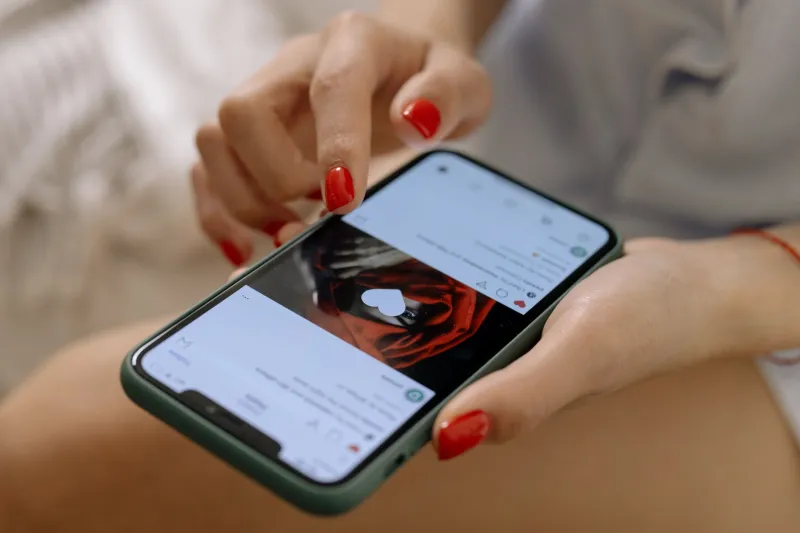
The Scroll Is the New Breaking Banner
Remember when a red "BREAKING NEWS" chyron crawling across your TV screen meant something? That feeling — the urgency, the adrenaline — has quietly migrated to your phone. These days, millions of Americans find out about major news events not from Anderson Cooper or a push notification from a legacy outlet, but from a shaky vertical video on TikTok or a chaotic thread on X (formerly Twitter).
The numbers back this up. A 2023 Pew Research Center survey found that roughly 43% of U.S. adults regularly get their news from social media, with younger demographics — particularly those under 30 — almost entirely bypassing traditional broadcast outlets. And when something big breaks, the gap between social media and cable can feel like an eternity. During the 2023 earthquake that rattled parts of the Pacific Northwest, residents were posting videos of shaking furniture on TikTok a full four to seven minutes before major cable networks had even confirmed the event.
So what exactly is going on under the hood?
The Algorithm Is the Assignment Desk
Traditional newsrooms operate on a fairly predictable rhythm: a tip comes in, editors verify it, reporters make calls, and a story gets published or broadcast. The whole process — even a fast-breaking one — involves multiple human checkpoints. Social media platforms, by contrast, operate on a fundamentally different logic.
TikTok's recommendation engine, for example, doesn't care whether a video is "news" in the traditional sense. It cares about engagement — watch time, shares, comments, replays. When a user in, say, Memphis posts a clip of smoke rising from a building and captions it "what is happening downtown??" that video can rack up 50,000 views before a single journalist has picked up the phone. The algorithm detects the engagement spike and pushes it further. Suddenly, it's everywhere.
X operates similarly, though its architecture is more text-forward. Trending hashtags can surface a developing story within minutes of the first posts, and the platform's open API has historically allowed third-party tools to monitor real-time spikes in topic volume — a feature journalists and newsrooms have quietly relied on for years.
Instagram, meanwhile, has leaned harder into its Stories and Reels formats to compete, though many media observers argue it still lags behind TikTok and X when it comes to raw breaking-news velocity.
Journalists Are Now Professional Scrollers
Here's a reality that would have sounded bizarre to reporters a decade ago: a significant chunk of a modern journalist's workday involves watching social media feeds like a hawk.
"I have TweetDeck columns running constantly, I monitor specific TikTok search terms, and I have alerts set up for geographic keywords," said one digital journalist at a major U.S. metropolitan newspaper who asked not to be named because they weren't authorized to speak on behalf of their outlet. "Half the time, I find out about something from a random person's post before our own wire services flag it."
This shift has forced newsrooms to develop what some editors call "social listening" protocols — structured systems for monitoring platforms in real time, flagging potential stories, and rapidly assessing whether what's circulating is actually true. Outlets like The New York Times, CNN, and NBC News have all invested in dedicated verification teams whose job is essentially to be the human firewall between raw social content and published reporting.
But that firewall has holes.
The Misinformation Multiplier
Speed is a double-edged sword, and the social media news ecosystem cuts deep on both sides. For every genuine eyewitness video that gives the public crucial early information, there are doctored clips, out-of-context footage, and flat-out fabrications racing through the same algorithmic channels.
The 2023 Maui wildfires became a painful case study. Within hours of the fires breaking out, social media was flooded with images — many of which were from entirely different disasters, some years old, some AI-generated. They spread faster than corrections could follow. By the time fact-checkers at major outlets had debunked dozens of false images, those images had already been seen by millions.
Platforms have made varying levels of effort to address this. X has leaned on its Community Notes feature — a crowdsourced fact-checking system that allows users to add context to misleading posts. The results have been mixed at best. TikTok has partnered with the Independent Fact-Checking Network (IFCN) and labels certain content as disputed, but critics argue the labels come too late and too quietly to counter the initial spread.
"The correction never travels as far as the original false story," noted Claire Wardle, a leading researcher in information disorder who has studied social media misinformation extensively. "That's been true since the printing press, but social media has turbocharged the asymmetry."
What Traditional Media Is Doing to Keep Up
Legacy news organizations haven't exactly been sitting on their hands. Many have dramatically accelerated their digital publishing workflows, built dedicated social media reporting teams, and leaned into live-blogging formats that allow for rolling updates — essentially mimicking the real-time feel of social platforms within a more controlled editorial environment.
CNN, Fox News, and MSNBC have all invested in integrating social media content directly into their broadcasts, with anchors frequently referencing viral posts and on-screen graphics pulling live tweet counts. It's an acknowledgment, however awkward, that the audience has already moved.
Some outlets are going further. The Washington Post has experimented with AI-assisted tools that can flag breaking developments from social platforms and draft preliminary story frameworks for human editors to review. The Associated Press has similar programs in development.
But there's a philosophical tension here that no technology can fully resolve. Traditional journalism's value proposition has always rested on verification, context, and accountability. The social media news ecosystem runs on the opposite values — immediacy, volume, and virality. Bridging those two worlds without sacrificing what makes journalism trustworthy is the central challenge of this moment.
The Real-Time Race Isn't Slowing Down
If anything, the competition is intensifying. Meta has been quietly rebuilding news-adjacent features on Instagram and Facebook after a period of pulling back from political and news content. TikTok continues to grow its U.S. user base despite ongoing regulatory scrutiny. And X, under its current ownership, has made no secret of its ambitions to become a real-time information hub — for better or worse.
For everyday Americans, the practical upshot is simple: your phone is now your fastest news source, full stop. The question is whether you can tell the difference between a verified report and a viral rumor. In a media landscape where the algorithm doesn't make that distinction for you, that skill has never mattered more.