The Freshest Story Isn't Always the Truest One: Inside Breaking News' Biggest Flaw
There's a particular kind of rush that comes with being the first person in your group chat to drop a breaking news link. You've seen it happen a hundred times — someone posts a headline, everyone reacts, and by the time the actual facts settle in a few hours later, half the original story has been quietly corrected or walked back entirely. And yet, nobody goes back to share the update. The damage is done.
This isn't just a quirk of social media behavior. It's a fundamental tension baked into the way modern news works — and it's getting harder to ignore.
The First Report Is Almost Always Incomplete
Here's something veteran journalists will tell you off the record: the first version of a breaking story is basically a rough draft published in public. Reporters are racing against each other, sources are panicked or unavailable, and the full picture hasn't emerged yet. That's not a criticism — it's just the reality of trying to cover something as it's actively unfolding.
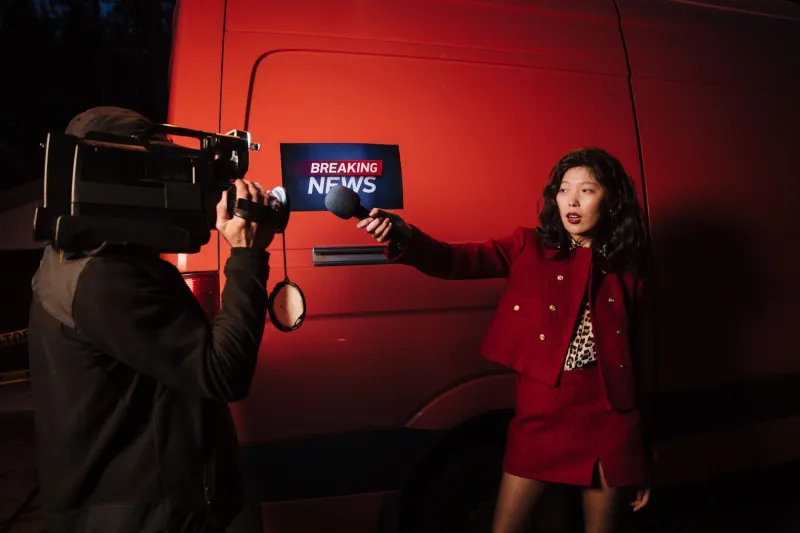
But audiences don't always process breaking news that way. When a story drops with that little red "BREAKING" banner attached, there's an implicit promise of truth baked into the urgency. The framing itself signals credibility. This just happened. We're telling you right now. This is real.
The problem is that "right now" and "accurate" are not the same thing — and they're often in direct conflict.
Think back to some of the most chaotic breaking news moments of the last decade. In the immediate aftermath of major events — mass shootings, celebrity deaths, political crises — initial reports routinely got the suspect wrong, the location wrong, the timeline wrong, and sometimes the basic facts of what actually happened completely backward. A few hours later, the corrections would roll in quietly, but by then the first version had already lapped the internet three times.
Why Our Brains Love the Raw Version
So if first reports are so unreliable, why do we keep gravitating toward them? Psychologists who study information consumption have a few theories, and none of them are particularly flattering to human nature.
For one thing, there's the simple thrill of novelty. Our brains are wired to pay attention to new information — it's a survival instinct that made a lot more sense when "new information" meant a predator was nearby, not that a celebrity couple had split. That dopamine hit from learning something first doesn't care whether the thing you learned is actually true.
There's also a social currency element that's impossible to separate from the equation. In an era where information flows through Twitter, TikTok, and Instagram at light speed, being the person who knew first carries genuine social weight. Sharing a story before your followers have seen it feels like a small but real form of status. Waiting a few hours to verify it before posting? That's the kind of patient behavior that doesn't exactly trend.
And then there's what researchers sometimes call "narrative momentum" — the psychological pull of a story that's still developing. An incomplete story is, paradoxically, more engaging than a complete one. The gaps demand to be filled. The uncertainty keeps you refreshing. A fully resolved, fact-checked story that lands two days after the event carries far less emotional charge than the chaotic, real-time version that had everyone talking.
The Corrections Nobody Reads
News organizations know this, and many of them are genuinely trying to do better. More outlets now use explicit language like "developing story" or "details are still emerging" to signal that what you're reading is preliminary. Some have experimented with withholding certain details until they're confirmed by multiple sources, even when competitors are already running with unverified information.
But here's the uncomfortable truth: corrections don't travel. Studies on misinformation spread have consistently found that false or incomplete stories get shared at dramatically higher rates than the corrections that follow them. One widely cited analysis found that false news spreads roughly six times faster on social platforms than accurate reporting. The correction, when it comes, reaches a fraction of the original audience — and often gets ignored by people who have already formed an opinion based on the first version.
This creates a kind of permanent record problem. Someone who saw the initial wrong report and never encountered the correction isn't misinformed because they're lazy or gullible. They're misinformed because the information ecosystem rewarded the wrong version and buried the right one.
Real Examples, Real Consequences
The Boston Marathon bombing coverage in 2013 is probably the most discussed example of this phenomenon in journalism schools across the country. In the chaotic hours following the attack, multiple major outlets — including some of the most respected names in American media — incorrectly identified suspects based on crowd-sourced speculation from Reddit. The misidentified individuals were real people. Their families received death threats. One of them, Sunil Tripathi, had actually been missing and was later found dead — a tragedy that was compounded by the false accusations that followed him in his final days.
More recently, celebrity death reports have become a recurring test case for the first-vs.-accurate problem. False death reports about living celebrities spread with alarming regularity, often originating from a single unverified tweet that gets picked up and amplified before anyone thinks to check. By the time the celebrity in question posts a very-much-alive selfie, millions of people have already processed the grief cycle and moved on.
Even in lower-stakes situations — a company announcing a product, a sports trade rumor, a political statement taken out of context — the pattern holds. The juicy, incomplete version gets the clicks. The full story gets the shrug.
Can Anything Actually Change?
There are people working on this problem from multiple angles. Some journalism organizations have adopted stricter internal protocols around breaking news, essentially creating a tiered system where unverified information gets flagged differently from confirmed reporting. Platforms like Twitter (now X) have experimented with labels and "community notes" to add context to viral misinformation, though the effectiveness of those tools is genuinely debated.
Media literacy education is another piece of the puzzle — teaching audiences, especially younger ones, to treat breaking news as a first draft rather than a final verdict. Some schools have started incorporating news literacy into their curriculums, which is a genuinely encouraging development even if the scale is still small.
But maybe the most honest answer is that this tension isn't going away anytime soon. The appetite for real-time information is too strong, the competitive pressure on news organizations is too intense, and the social rewards for sharing first are too immediate. The 24-hour news cycle didn't create this problem — it just turbocharged something that was always there.
The best any of us can do, as news consumers, is develop a little more patience with the stories that are still developing. Give it a few hours. Wait for the second version. And maybe — just maybe — resist the urge to share that breaking alert until you've seen whether the details actually hold up.
Because the freshest story and the truest story are rarely the same thing. And knowing that might be the most useful piece of news you'll read all day.