Your Brain on Breaking News: Why the 24-Hour Cycle Is Wearing You Out
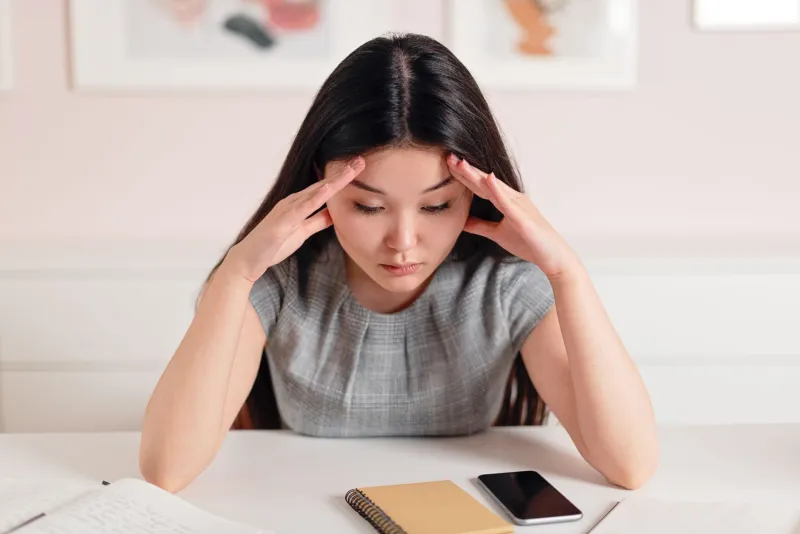
You've probably felt it. That specific kind of tired that isn't about sleep — the dull, low-grade mental fog that settles in after an afternoon of refreshing news feeds, reading updates that contradict the updates from an hour ago, and absorbing one urgent alert after another. You're not imagining it. Researchers have started measuring it, and the data is not particularly comforting.
Breaking news fatigue is real, it's widespread, and it has a measurable effect on how your brain processes information, retains facts, and regulates stress. Here's what the science actually says.
The Attention Problem
Human attention isn't designed for infinite input. The brain operates on what neurologists call a limited-capacity model — there's only so much working memory available at any given moment, and when it gets overloaded, performance degrades. Fast.
Eye-tracking studies conducted by researchers at the University of Pennsylvania found that readers exposed to continuous news streams showed significantly shorter fixation times on individual stories compared to readers who accessed news in discrete, scheduled sessions. In plain terms: when news never stops, you stop actually reading it. Your eyes move faster, you absorb less, and your brain starts pattern-matching headlines instead of processing content.
"What we're seeing is a kind of triage behavior," explained one cognitive psychologist whose work focuses on digital media consumption. "The brain is trying to protect itself from overload by skimming rather than engaging. The problem is that skimming breaking news is exactly how misinformation takes hold. You catch the headline, miss the context, and the false impression sticks."
The Cortisol Connection
Breaking news isn't just an attention issue — it's a physiological one. News alerts, particularly those framed around threat, conflict, or uncertainty, trigger the body's stress response. Cortisol, the hormone associated with the fight-or-flight reaction, spikes in response to perceived threats. And the brain, for all its sophistication, doesn't always distinguish well between an actual threat and a push notification about one.
Researchers at the American Psychological Association have been tracking what they call "news-related stress" for several years, and the numbers have climbed steadily. In their most recent survey data, more than 68% of American adults reported that following the news caused them significant stress — a number that has increased sharply since the normalization of 24-hour digital news cycles.
The insidious part? The stress response keeps you engaged. Cortisol primes you to pay attention to threats, which means alarming news is neurologically sticky in a way that calmer, more nuanced reporting simply isn't. You're not doomscrolling because you lack willpower. You're doomscrolling because your brain is doing exactly what evolution built it to do, applied to a context evolution never anticipated.
What Retention Data Is Telling Newsrooms
Reader behavior analytics — the kind that major news platforms track obsessively — paint a picture that should concern anyone who cares about an informed public.
Average time-on-page for breaking news articles has dropped consistently over the past five years across most major platforms. Stories that would have held a reader's attention for four to six minutes in 2018 now average under two minutes. Scroll depth — how far down a page a reader actually gets — has declined similarly.
What's replacing deep reading? Headline consumption. Readers are increasingly absorbing news through titles, subheadings, and social media summaries rather than full articles. Media researchers call this "surface-level news literacy," and while it's not entirely new, its prevalence has accelerated dramatically alongside the rise of real-time news feeds.
"The format is eating the content," said one media researcher at a major American university who studies digital journalism trends. "When everything is breaking, nothing is. Readers have adapted by treating all news as equally urgent and equally disposable, which means they're treating it as equally ignorable."
The Exhaustion Spiral
Here's where it gets particularly complicated. Breaking news fatigue doesn't necessarily lead people to consume less news. For many Americans, it leads to a paradoxical consumption spiral: feeling overwhelmed prompts a desire to stay informed (to regain a sense of control), which drives more consumption, which produces more overwhelm.
Psychologists who study media behavior describe this as a "vigilance trap." The feeling that you might miss something important — a development, a change, a reversal — keeps you tethered to the feed even when the feed is making you feel worse.
"There's a real anxiety component here," noted one clinical psychologist who works with patients experiencing what she calls "current events anxiety." "People feel like disengaging from the news is irresponsible, like they're checking out. So they stay in, even when staying in is actively harming their mental health."
Are Some Formats Worse Than Others?
Not all breaking news consumption hits the brain equally hard. Research suggests that audio formats — podcasts and radio — produce lower stress responses than visual news feeds, possibly because they don't trigger the same compulsive refresh behavior. Long-form written journalism, consumed in focused sessions, shows better retention and lower cortisol response than equivalent content delivered via push notifications.
Social media-based news consumption consistently scores worst across both stress and retention metrics. The combination of infinite scroll design, intermittent reward structures (the same psychological mechanism that makes slot machines addictive), and algorithmically prioritized emotional content creates what researchers describe as a "maximum engagement, minimum information" environment.
In other words, the format most Americans now use as their primary news source is also the one most likely to exhaust them while teaching them the least.
What You Can Actually Do
Researchers and mental health professionals are increasingly recommending what some call "news hygiene" — structured habits around news consumption designed to preserve both mental health and actual comprehension. Scheduled news sessions rather than constant monitoring. Prioritizing long-form sources for complex stories. Treating push notifications as optional rather than obligatory.
None of that is revolutionary advice. But the fact that psychologists are now framing news consumption as a health behavior — something to be managed deliberately rather than engaged with reflexively — says something significant about where we've landed.
The 24-hour news cycle was built for the news industry's survival. Whether it's compatible with yours is a question worth sitting with — preferably away from your phone.